
by Tom Horvath, PhD, ABPP
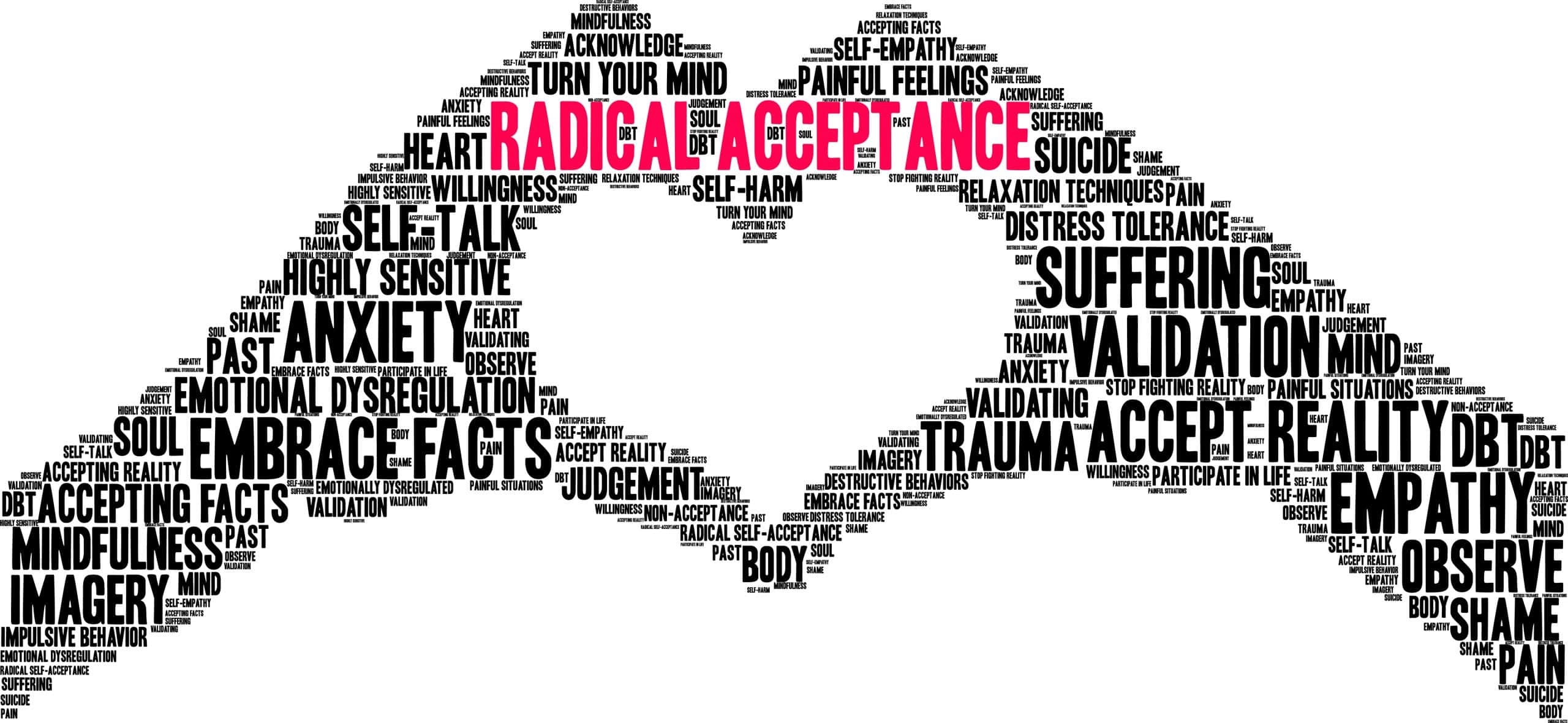
Dialectical Behavior Therapy (DBT) places a primary focus on improving distress tolerance. One of several tools DBT offers for tolerating distress is radical acceptance.
The context of using any of the distress tolerance tools is the recognition that life will have distress, and that we need to learn how to bear up under it. Life is worth living even if it can be painful. DBT distress tolerance skills are designed to help us get through a crisis, but these tools benefit from practice in advance. These skills can help us accept the discomfort or pain that occur in a crisis, while preventing that discomfort or pain from rising to the level of suffering.
Radical = “going to the root,” like a radish. Radical acceptance does not mean we approve of reality. Radical acceptance means complete acceptance of reality as it is, however unpleasant or undesired it may be. We do not reject reality, we accept it. We recognize that, whatever the causes of the current reality, causes exist, even if we do not understand them. Reality is, as it is, because of these causes. Reality is as it should be. By accepting reality we are in a position to let go of bitterness or other painful emotions. With acceptance we may also be in a position to change the reality we are encountering.
Fortunately, our own personal histories probably contain many examples of accepting a reality we did not like, and then moving on. In some situations we may have accepted the reality so quickly we did not even give ourselves credit for doing so. You might think about the realities you struggled with, and the ones you did not. What are differences? How could you learn from the easy ones, and apply that knowledge to the difficult ones? Whatever challenging realities you face now would benefit from your accepting them. Then you can consider your options for modifying reality to whatever degree is possible, or simply adjusting your life to the reality you now accept.