by Thaddeus Camlin, Psy.D.
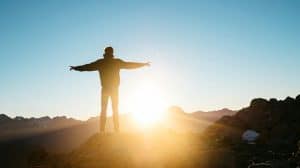
 Lifestyle impositions stifle our sense of freedom and challenge us to get back to the basics in order to maintain psychological and emotional wellbeing. Restriction conjures rebellion. Rarely is the spirit more determined than when caged. The essence of finding the feeling of freedom amidst extreme limitation lies in reconnecting with the senses. The modern human has been conditioned to life with a plethora of sophisticated distractions at our beck and call. With the world and everything we want in it just a one click, buy-it-now, 2-day shipping, instant transfer of ones and zeros is a database away, the beauty of the basics are rendered, well, in millennial vernacular, ‘basic.’ To cultivate the feeling of freedom we need not look beyond the senses. Wind in the face, the smell of a green valley after a patient rain, hot sun cracking our air conditioned consciousness, brisk mornings summoning the inner furnace into action, the taste of home after the wanderings of the road, the reassuring sight of the excited glance, basic sensory experience is the foundation of freedom and the sacred – as well as a cornerstone for coping during coronavirus.
Somewhere along the way we were duped. Somehow, human creations became more sacred than the creations of the universe from whence humans came. Watching on TV replaced going to see for ourselves. Nothing is more erosive to the feeling of freedom than the constant striving to maximize pleasure and comfort. When the cord is cut our freedom is found in immersive sensory experience outside. Benefits of experience in the natural world are vast and wide reaching. Watching the planet earth TV series from the comfort of our homes can remind us of the beauty of nature, but it is no substitute for the raw sensory experience of awe and trembling at the humbling power of planet earth live in the flesh.
The Beauty of Basic
Riding a bicycle on a dirt trail through a flowering landscape, running barefoot on the exfoliating sands of the beach, gliding on roller blades in the cool shade of tall trees, the rush of skateboarding down the rail of the old elementary school staircase, driving a winding country road with the windows down, hiking the hill at the end of the street to watch a golden sunset, walking in the cleansing spirit of the rain, smelling Grandma’s masterpiece baking in the stove, sensory experience teaches us what cannot be told and connects us with what cannot be sold.
Wide-eyed and curious, adventure is the feeling of freedom filtered through the senses. The question ‘Why?,’ obviously will never be answered, as it should be, which leaves us with now and how we seize it. How best to seize right now is a question only we can answer correctly, and we arrive at the correct answer by repeatedly answering incorrectly.
Thus we stand, betwixt the open road and the cage, a juxtaposition of bewilderment and certainty. I know that I know that I know that falling trees create sound vibrations, witness or not. Caged within the senses, the limits of their variation frame our freedom and we fill that frame to our heart’s content. Do what thou will isn’t a suggestion, it’s the answer to everything, it is how we become who we are.
The will, however, is cunning. Self-alignment is rare in an age of mass socialphrenia where the psyche suffers the toll of betrayal, and the cost is enormous. We must hold ourselves in kind regard if we are to do anything of value. To value ourselves we must know our values. To know our values we must know our Self. Acting in accordance with values is self-alignment. Self-alignment results in doing what thou will.
A prolonged, expansive engagement of the senses may be the most effective method of knowing the will. Truth and clarity exist in the raw immersion of sensory experience that drowns out the incessant, infantile naggings of the ego. Just like Freud argued the value of making the unconscious conscious, only to return it to the unconscious, so must humankind integrate and transcend the primal connection and the enlightened consciousness of the hero age. Patience with ourselves is essential. We will return to old patterns and repeat some mistakes. As Nietzsche reminded us, when we are tired, we are attacked by ideas we conquered long ago. When overextended, overwhelmed, and generally just over it, it is time to get back to the basics of sensory experience, rest, nutrition, and meaningful action to restore ourselves to the exhilarating feeling of freedom essential to a fulfilling life of purpose.