
Cannabis and THC: Neurotoxic or Neuroprotective?
By Kenneth Anderson, MA Normal and Retrograde Neurotransmission Delta-9 THC (delta-9-tetrahydrocannabinol) and CBD (cannabidiol) are the two most commonly found cannabinoids in the cannabis plant. The plant contains over 100 other cannabinoids as well. THC and CBD both affect the endocannabinoid system. “Endo-” is a Greek prefix meaning “inside.” “Endocannabinoid system” refers to all the […]
Life and Values: Thinking Back After Thinking Ahead
By Tom Horvath, PhD I expect that you know everything I am about to write about. However, I hope this blog will be a useful reminder about life and values. A well-lived life is based on values. We act on values we are not even aware of. However, we know many of them. Becoming even […]
Internal vs. External Mood Regulation
By Tom Horvath, PhD How well can I calm myself or energize myself using my own abilities? How much do I need to use a substance for help? Although at times a mild sedative (one drink) or mild stimulant (a cup of coffee) can be a helpful tool, the more we rely on such tools […]
Coping with Boredom
By Tom Horvath, PhD Boredom is the perception of being under-stimulated. We all have optimal levels of stimulation (some generally want more, some generally less). Whatever your level, when you are not getting enough, you are bored (and when over-stimulated, you may be stressed). Boredom is often considered an undesirable state. However, let’s start with […]
Practicing Psychological Skills: What is Effective Practice?
By Tom Horvath, PhD This blog will focus less on physical skills (like playing the piano or hitting a baseball) and more on “psychological skills” like being assertive. Physical and psychological skills are not entirely distinct. Your body will need to play its part in a psychological skill. For instance, you would need to say […]
A Closer Look at the Rat Park Experiment, Part 2
A Closer Look at the Rat Park Experiment, Part 2 By Kenneth Anderson, MA Part 1 reviewed some of the historical background which led up to the rat park studies. Part 2 reviews the rat park studies themselves. Part 3 will take a look at where we have gone since. Bruce K. Alexander’s first rat […]
Social Fitness
By Tom Horvath, PhD We regularly see criteria for evaluating our health, physical fitness, or financial well-being. If our relationships are the primary source of our emotional well-being (a statement apparently accurate for most people), then guidelines for evaluating our relationships would also be valuable. Having both one or a few intimates, and a wide […]
Radical Acceptance
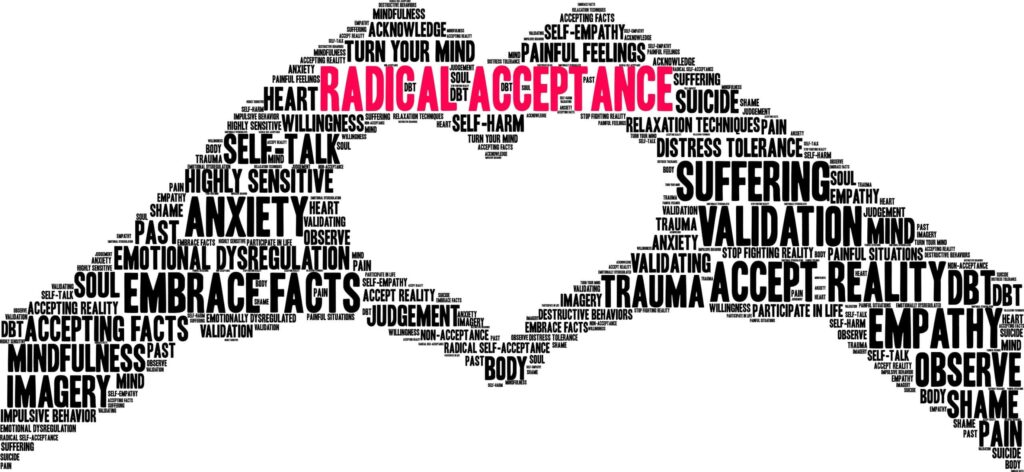
by Tom Horvath, PhD, ABPP Dialectical Behavior Therapy (DBT) places a primary focus on improving distress tolerance. One of several tools DBT offers for tolerating distress is radical acceptance. The context of using any of the distress tolerance tools is the recognition that life will have distress, and that we need to learn how to […]
Dialectical Dilemmas

by Tom Horvath, PhD, ABPP Dialectical is a word with a long history (back to the Greeks), but for now let’s define it as “focusing or acting on the interaction of opposing forces or ideas.” Dialectical Behavior Therapy (DBT) identifies and addresses three common dialectical dilemmas, in order to improve emotional self-regulation, one of the […]
Managing Interpersonal Boundaries, pt. I

by Tom Horvath, PhD, ABPP Interpersonal boundaries are part of the rules we establish about how to interact with other people. We can compare interpersonal boundaries to being in a house. The house protects us from the outside, and on the inside we protect our warm or cool air, our possessions, and our privacy. Houses […]