Practical Recovery

Tag: addiction

  • Can You Trust Your Own Judgment in Addiction Recovery?

    Can You Trust Your Own Judgment in Addiction Recovery?

    Addiction recovery requires accomplishing several tasks, including:Decision making - trust yourself after addiction

    • Build and maintain motivation
    • Connect with others
    • Identify and develop alternative coping methods
    • Reduce resentment about changing
    • Identify, understand and cope with craving
    • Build a new, balanced life
    • Lead a life that is purposeful, meaningful, and happy
    • Stay alert for problems and follow through all the way

    Making Continued Progress

    To accomplish these tasks, you will need to make MANY decisions along the way. However, your judgment about your addictive behavior(s) has not been good. How could you trust yourself after addiction to make decisions about recovery?
    You could put yourself in the hands of others (AA, a therapist, your higher power, etc.).  However, many are not willing to do this, yet still want recovery.

    The Process

    For these individuals, recovery is a process of discovery. You will need to think about new ways of being and behaving. You will try them out, first in imagination, and possibly in practice. Like a scientific researcher, you will need to determine which ideas are most promising and need to be tested first. If these early ideas are successful, you may not even need to try more! The whole process, however, will need to be guided by your own judgment.
    Your self-doubt may be strong, especially if you think you are “out of control.” However, you still have capabilities and can still make good decisions and trust yourself after addiction (even if you also make some bad ones). You can identify these words and understand them. You have decided to continue reading, which keeps open the possibility you will learn something new and helpful. You are searching for information, and you realize you need it.  Half of solving any problem is recognizing it. You are not completely without judgment, resources, or capabilities!

    Change Your Thinking

    One of the common thinking errors is all-or-none thinking. If you have made some less-than-great decisions (and who hasn’t!) then it may seem sensible to conclude that your judgment is completely gone. However, your judgment in many (if not most) areas of life is fine. Your take this competence for granted, but it is nevertheless real. If your judgment is adequate in these areas, you can develop it in other areas also.
    If my judgment is so good, why haven’t I overcome addiction already? Probably because you haven’t focused on it sufficiently. To overcome addiction involves facing up to the conflict of wanting the addiction but not wanting the consequences. Faced with this conflict, we often just hope it will go away.  There are always other problems you can pay attention to!   Even individuals with superlative judgment have difficulty prioritizing problems. You could wait because your conflict might go away on its own, just as you wish. Changing jobs or neighborhoods, developing new relationships, or other life changes are often associated with addiction changes.
    However, you can decide it’s time to face addiction problems, and stay focused on them until they are solved. You will need to follow that good decision with a few more good decisions. But you make decisions all day long and must be fairly good at it or you wouldn’t still be here. Stay focused on the recovery decisions you need to make, learn from your mistakes, and make recovery happen!
  • Could an ‘Intervention’ Have Helped Michael Jackson?

    Could an ‘Intervention’ Have Helped Michael Jackson?

    michael jackson's overdose - what would an intervention look likeWithin hours of Michael Jackson’s overdose, many asked, could an “intervention” have saved him, by persuading him to seek alcohol and drug rehab? Because it came out in the press that Jackson had actually experienced two interventions, the immediate answer to this question would appear to be that intervention was not helpful, at least to Jackson. But let us imagine what might have happened at these interventions, to understand more about intervention itself.

    What is an Addiction Intervention?

    The ‘Johnson Intervention’ is an organized confrontation in which the person with an addiction is misled into showing up somewhere (often by being told a lie), and then “ambushed” by as many significant others as can be recruited. Each person recites a prepared and rehearsed list of concerns and resentments. Individuals who support doing interventions state that “denial is at the core of addiction, and breaking through denial can require extreme measures.”  As part of the extreme measures, the victim of an intervention is given an ultimatum, which typically is that the friends and family will end or dramatically modify their relationship with the “alcoholic or addict” unless he or she immediately enters the treatment facility that has been picked out.
    There are other methods of intervention, and the Johnson variety may be the most extreme. The procedure was developed by a clergy person, the Rev. Vernon E. Johnson, and was promoted by his Johnson Institute from 1966 until 2009 when the Johnson Institute transferred key programs and products to the Hazelden Foundation Center for Public Advocacy.  Both Johnson and Hazelden are 12-step oriented, so referral to Hazelden’s 12-step based treatment programs, or similar programs, can be assumed to be the standard goal of Johnson style interventions.

    Addiction and Celebrities

    We don’t know which type of intervention Jackson experienced. In his case, however, the ultimatum might not have meant much. Because he was the source of money and employment for many of those around him, how seriously did his significant others mean it when they gave him ultimatums? How willing were they to cut themselves off from financial involvement with Jackson? The consequences of celebrities (or the wealthy) face for their addictive behavior may be dramatically smaller (until they die) than the consequences faced by ordinary individuals.
    The evidence from research indicates that confrontation (such as in an intervention, but also any aspect of addiction treatment or recovery) is ineffective. Confrontation leads to increased emotional disturbance, including depression and anxiety. For the victim of an intervention, increased substance use might be expected, in that substance use is the preferred way to cope with emotional upsets. After a ‘hard-core’ intervention, which might result in the desertion of friends and family, emotional despair and even suicide become imaginable.

    Addiction Recovery in Small Steps

    What might have happened in the intervention that could have prevented Michael Jackson’s overdose?  First, Jackson, if he already did not realize it, would likely have seen how much his significant others depended on him and his money. Unfortunately, this realization may have reinforced the false idea that he could do anything he wanted in life with little fear of consequences. Second, Jackson was likely given an extreme choice: go to [this treatment center] or else. Even though the “or else” probably proved to be weak, perhaps the saddest part of these interventions would have been that no one sat down with Jackson and objectively discussed his options. What might have happened for Jackson if instead of being ordered to do something he must not have wanted to do, he could have been informed about and helped to move forward on some small changes in his life? Ironically, despite the drama of the intervention procedure, most life changes, even in addiction recovery, happen in small steps, not large ones. Unfortunately, Jackson may never have been helped to make the small steps which over time could have added up to large ones.
  • The Roots of Drug Abuse

    The Roots of Drug Abuse

    Finding the roots of drug abusePerception vs. Reality

    Generalities about people tend to be either trite or misleading.  To risk one anyway, I have acquired the impression that all the people I have worked with, in addiction treatment for severe and persistent drug use, regard the drug (or drugs) as their most dependable and effective source of soothing (calming, relaxing, good feeling, etc.). Let us call such individuals “drug abusers.”  I use the term “drug abuser” in quotes because I do not want to make a caricature of a real person.  In other words, for a “drug abuser,” other people are regarded and experienced as relatively useless for emotional survival in the world (even the person’s partner, if there is one). The “drug abuser” is not choosing the drug over the partner in the sense of a competition in which either party might prevail.  For the drug abuser, there is no competition because there is never any doubt that drugs are more reliable than people.

    Choice Determined by the Possibilities

    The “drug abuser” has acquired this preference honestly, based on personal experience in living.  It is of fundamental importance, at least for a therapeutic attitude, to realize that the “drug abuser” did not acquire the habit of turning to drugs “perversely,” nor is it maintained “perversely.” To draw upon an existential saying (I encountered this saying in an existentially-oriented treatise on criminality), “choice is determined by the possibilities you can see.”  The emphasis here is on you can see, not what someone else can see.  The “drug abuser” makes the best choice from the choices that are seen. There is no point in choosing something useless (just say no, take a walk in the park, unburden yourself to your spouse, etc.).  What is pushing the “drug abuser” to use drugs is, to put it simply, emotional pain and emptiness (“drug abusers” frequently say “boredom”) that just will not go away.  This brings me to the “drug abuser’s” personal history—the growing up history, the personal history in the family.

    The Past and The Present

    Conventional discussion distinguishes between the present and the past, with the emphasis that the past is gone and should not influence the present.  A simple examination will reveal that this idea is not sensible. For example, in and around 2008 the economy was relearning why all those limiting financial regulations were established by the federal government in the first place.  The chronological past should be distinguished from the emotional or psychological past.  I am inclined to agree with the novelist William Faulkner’s comment about the emotional and psychological past: “The past isn’t dead, it isn’t even the past.”  The point is that emotionally significant experiences do not pass out of existence as time goes by as far as the experiencing person is concerned (think of holding a grudge, even if you think holding a grudge is indefensible).  Typically it is someone else who thinks that an individual’s personal experiences should pass out of existence (or be forgotten, forgiven, understood, put it in perspective, etc.), rather than ourselves.

    The roots of drug abuse: pain, emptiness, and the basic distrust and lack of use for other people when it comes to ameliorating pain and emptiness, derives from actual experiences in life, and especially in the family, growing up.  In the worst-case scenario, the person did not even have a family in the usual sense growing up.

    When I see a “drug abuser” in addiction treatment my primary concern is to help the individual understand how the past remains in the present via the roots of drug abuse and to consider how that past and present might be changed, to end the costs that arise when drugs are used to solve emotional problems.

  • Can Drinking and Drugging Improve My Social Life?

    Can Drinking and Drugging Improve My Social Life?

    drinking and drugging - can it improve my social lifeYes, but…let’s discuss how drugs and alcohol can actually have a beneficial effect on your social life (or at least appear to). In the second section let’s discuss why drug and alcohol use can still be a bad idea for you.

    How Drinking and Drugging Can Help Your Social Life

    One of the most frequent reasons people use drugs, and especially alcohol, is to improve their social ability, either in social groups or on dates: “I didn’t know how to enjoy myself with others unless I did this.  And I could go on a date more easily.” Related to this benefit of using is the possibility of overcoming social awkwardness: “When I did this I didn’t feel insecure, bashful, shy, ill at ease, inadequate, or left out.”

    You may also be interested in: Self-Confidence vs. Self-Esteem

    Perhaps you don’t think you belong to any group. It is easy to join a group of other users/drinkers by joining in their activity: “When I did this, I knew that I fit in with them, that I was one of them. By doing it I could be involved with others I would not have been able to be involved with otherwise because they wouldn’t have accepted me.”
    Sometimes we are already in a group, and we get pressure to drink or use. The easiest way to deal with this pressure is to give in to it: “When others put pressure on me, it was just easier to do it.” Or, in the group we already belong to, we want to feel more important: “By doing it I felt that I was important and special, I was somebody.”

    The Pitfalls of Conflict Resolution

    When conflict comes up, perhaps in a group, but more often in a couple or family, one way to respond is to drink or use, which can have the momentary effect of blocking out the conflict: “This was a way to deal with the con­flict we had.  I couldn’t cope with him/her (or a group) very well otherwise.”

    Sometimes the group we are interested in communicating with is society in general, and we want to assert our freedom: “By doing this I could show others that I do what I want to do, not what others want me to do.” Sometimes the group is our family, and especially our (little) children, from whom we want to escape: “They would have driven me crazy otherwise!”
    So you may be thinking, “this is an impressive list of benefits of drinking and drugging.” Indeed, it is. This list helps explain why so many people drink and drug!

    How it Can Create More Problems Than it Solves

    So why wouldn’t everyone drink and drug? There are two primary reasons. The examples given here show how drinking/drugging provides a short-term escape or coping device for the underlying problem but also does not provide a real solution. This means that if you don’t find a real solution, you just tend to keep drinking and drugging to deal with the problem.
    You could keep drinking and drugging to deal with problems (of any type). But there is a good chance the drinking and drugging will over time become a bigger problem than the original problem. The risk of creating an even bigger problem is the second primary reason not to rely on drinking/drugging to improve your social life!
  • How to Cope with Painful Feelings

    How to Cope with Painful Feelings

    learning how to cope with painful feelingsWhy We Cope:

    No one complains about feeling happy! But we don’t want to have other, painful feelings. When these feelings arise, one way to respond to them is to drink or drug. One set of painful feelings can be broadly labeled fear or anxiety: ”Drugs and/or alcohol helped me cope with feelings like anxiety, tension, fear, stress, agitation, nervousness, vulnerability, intimidation, embarrassment, and panic.” Other painful feelings center around sadness and depression: ”They helped me cope with feelings like depression, sadness, hurt, discouragement, grief, feeling defeated, feeling deprived or feeling abandoned.”
    There are many other painful feelings as well:
    a) frustration, resentment, anger, annoyance, irritability, and rage
    b) feeling remorseful, ashamed, guilty, responsible, humiliated
    c) feeling disgusted or shocked
    d) feeling bored, apathetic, or impatient
    e) feeling over-excited, “amped up,” “wired”
    f) feeling exhausted or depleted
    g) feeling lonely, isolated, cut off, alienated
    h) feeling powerless
    i) feeling “in pain” without being able to define the pain very well (perhaps a mixture of many painful feelings)

    Ways that We Cope:

    How well do drugs and alcohol work to cope with these painful feelings? For most of us, quite well! If you have had the experience of alcohol relaxing you, or coke giving you energy, or Vicodin just helping you feel better, you don’t need much explanation of these effects. For some, the drugs immediately create bad feelings more than they resolve them. Did you ever see anyone get paranoid after smoking pot or doing a line of coke? These folks aren’t likely to turn to drugs (or at least that drug) for help dealing with bad feelings!
    But if you are reading this article, you may be in the group that believes how to cope with painful feelings is to seek emotional relief from one or more drugs. Have you found yourself thinking:
    “It helped me bring my feelings into a more normal range. They were just too out of control without it.”
    “I don’t understand why, but I felt tremendous pain, and when I did this the pain was less.”
    “It helped me cope when I felt like I had nothing left inside of me.”
    So what is the problem with this? Maybe nothing, if you don’t do it often or in large quantities. Did you ever overeat to cope with stress? That overeating isn’t a big problem unless it becomes a pattern, a habit, a way of life.

    Drug Use as a Way to Cope with Painful Feelings:

    The problems from drug use (or overeating) come from two factors: 1) by using you have not dealt with the problem directly (by delaying dealing with it you may have allowed it to get even worse), and 2) drug use is by itself becomes, sometimes quickly, a problem in many ways, including having a negative impact on how you fit into your family and social group, your health, your emotional well-being, your financial security, your legal status, and other ways you are likely familiar with.
    However, neither of these facts is guaranteed. Maybe delay will actually help. Maybe the drug you use, in the quantities and ways you do it, causes little harm (think “caffeine”).
    So, the only way to know if the drug use you engage in is worth the cost is to list the benefits of using and the costs of using. Then think very hard about your lists. If you decide that the costs exceed the benefits, then it’s time to make a change.
  • What is Denial?

    What is Denial?

    what is denialDenial is one aspect of resistance to change. In regards to addiction, it involves denying or minimizing the existence or seriousness of addiction problems. Unfortunately, within the field of traditional (12-step) addiction treatment, the belief is that “addiction is a disease and denial is its symptom.” From the traditional perspective, it is also believed that “alcoholics and addicts” exhibit denial as a rather permanent “character trait.” It requires strong and direct confrontation, and sometimes other extreme measures, to blast through denial. Based on this traditional perspective individuals with addictions are sometimes treated in cruel or disrespectful ways, which would never be considered with any other clients or patients.

    Is Denial a Symptom of Addiction?

    However, denial as a central symptom of addiction is not supported by scientific evidence.   “Research demonstrates that a counselor can drive resistance levels up and down dramatically according to his or her personal counseling style,” says William Miller, Ph.D., the developer of Motivational Interviewing.  In motivational interviewing a “respectful, reflective approach” is used to help clients focus on the difficult realities their addictive behavior has created.  Argumentation, direct confrontation, and the accusation of “being in denial” does not occur.  Information and training in motivational interviewing are, unfortunately, only slowly infiltrating outpatient addiction treatment and alcohol and drug rehab.
    Psychologists J. Brehm and S. Brehm in the 1960s identified “psychological reactance,” the very predictable resistance most individuals express when confronted with forceful demands for change or for relinquishing some of their freedom. Would not “denial” be an excellent example of “reactance?” If you love to (drink, or do anything) and someone tells you forcefully that you need to quit forever, what are you likely to think, feel, and say? Even if you realize that alcohol is causing problems, you are likely to resist a DEMAND for change, just because it is a demand, and also because you still love drinking!   Resistance and ambivalence to change– being both for and against – should be regarded as normal in the early stages of any therapy aimed at behavior change. It should be recognized that all people, addicts and non-addicts alike, tend to resist change, especially when it is forcefully demanded.

    Confrontation of Addiction

    If confrontation elicits defensiveness and denial, why are confrontational therapists so resistant to changing their approach? Unfortunately, therapists who use confrontation understand the resulting resistance, “denial” and poor motivation as a manifestation of an “addictive personality,” which has denial as a primary trait. Apparently, many of these confrontational therapists do not realize how their own behavior is eliciting the “denial” they observe.  
    Imagine that you have no addiction problems, but are sent (perhaps because of a misunderstanding) to be interviewed by a confrontational professional.  You are asked, do you have any drinking problems? You state, no, I drink only a little, and only occasionally. The professional states, but I understand that you have had serious problems. You respond, no, I have not. The professional states, I can see that you are exhibiting denial, which is the cardinal symptom of the disease of alcoholism, so you must be an alcoholic, and you need to go off to alcohol and drug rehab immediately. Unfortunately, you are now in a Catch-22, and may not easily be able to get out of it!

    Motivational Interviewing for Addiction

    Rather than confronting and eliciting denial, professionals would be much more helpful if they used a motivational interviewing approach to change. In this approach, clients are encouraged to express their own views about their addictive behavior and respectfully helped to see that their behavior may be more in contradiction with their own values than they had realized. When the contradictions are brought into awareness, motivation to resolve them by changing addictive behavior is much more likely.
  • Addiction as Mismanaged Desire

    Addiction as Mismanaged Desire

    Child craving donuts - metaphor for addiction and desireHow Does Addiction Develop?

    Addiction develops when desire goes unchecked. Desire is a fundamental aspect of human life, and learning to manage desire is part of normal human development. Overcoming addiction is a special case of managing desire. Overcoming addiction is managing desire ‘writ large.’

    You might also be interested in: Drugs Don’t Cause Addiction

    Satisfying Desires

    I leave out of this discussion some Eastern approaches to living, in which the goal of proper living is the elimination of desire. In Western tradition, life is about satisfying desire. Some desires have their own names: hunger, thirst, greed, lust. Otherwise, we speak of desiring (seeking, wanting, wishing for) various objects and situations in our lives. We feel these desires with varying degrees of intensity. We spend our time identifying, sorting, and acting on our desires. We attempt to satisfy those reasonably within our reach. We feel lucky when we get something we weren’t sure we could obtain, and disappointed when we miss out on something we thought was within easy reach.

    The stuff of daily life is effort expended to satisfy a desire. We work or go to school, possibly because we are satisfied with these activities in themselves, but also because we earn or hope to earn money to purchase items and experiences, to satisfy our desires. We seek satisfaction (we might also call it pleasure). What money buys will satisfy us directly, or position us to obtain satisfaction. Besides money-making, we engage in many other activities that are meant to other ends. Those ends ultimately can be described as satisfaction, or as happiness. There are vast differences in what individuals find satisfying. There are also vast differences in their capacity to accept new satisfactions in place of old. Changing one’s satisfaction is central to overcoming addiction.

    How Conflict Can Lead to Addiction

    Conflict is also the stuff of daily life. Conflict occurs when one person desires this, and another desires that, or the same person desires both this and that (two incompatible things). In addiction, a conflict can occur, for instance, between a desire for substance-induced euphoria, and a desire for health. Recognizing and examining this conflict are the first steps to managing addiction, just as they are for managing other conflicts. Both sides need to sit at the negotiating table and air their agendas before a resolution can be found. If there is no conflict there is no addiction.   Under certain circumstances what might look like an addiction is not addiction, because the conflict does not exist. “Morphine addiction” in the terminal patient is a clear example.

    We can outgrow earlier or excessive pursuits (and the desires that prompt them), by developing equally (even if somewhat differently) satisfying pursuits. At age 5 my favorite food was popsicles. I still enjoy an occasional popsicle, but my tastes have matured. Freud called the process of reaching higher satisfactions ‘sublimation.’ Socrates called it ascending the ‘ladder of love.’ Our goal is to transform the desire itself. Otherwise, we are, in varying degrees, slaves to it.

    Our hard-wired desires, or drives, such as hunger, prompt us to do what we need to do to survive. Our learned desires motivate us to pursue experiences that lead to pleasure, satisfaction, and at times, euphoria. Without desire, we would not survive, nor pursue activities. We would have no reason to. However, desire can be unmanaged or mismanaged. Addiction is one form of this mismanagement.

    In severe addiction, our learned desires (those related to satisfaction) appear to become confused with our hard-wired desires (those related to survival: food, sex, attention from others). Over time our satisfactions actually decrease, but we pursue our addictions as if our survival depended on them. Even though our survival is not at stake, we act like it is! Fortunately, it is possible to overcome this situation. Although the path to recovery can be long, getting onto that path requires recognizing that by acting on some of our desires we are not surviving, but perhaps killing ourselves!

  • The Relationship Between Addiction and Habit
    The Relationship Between Addiction and Habit

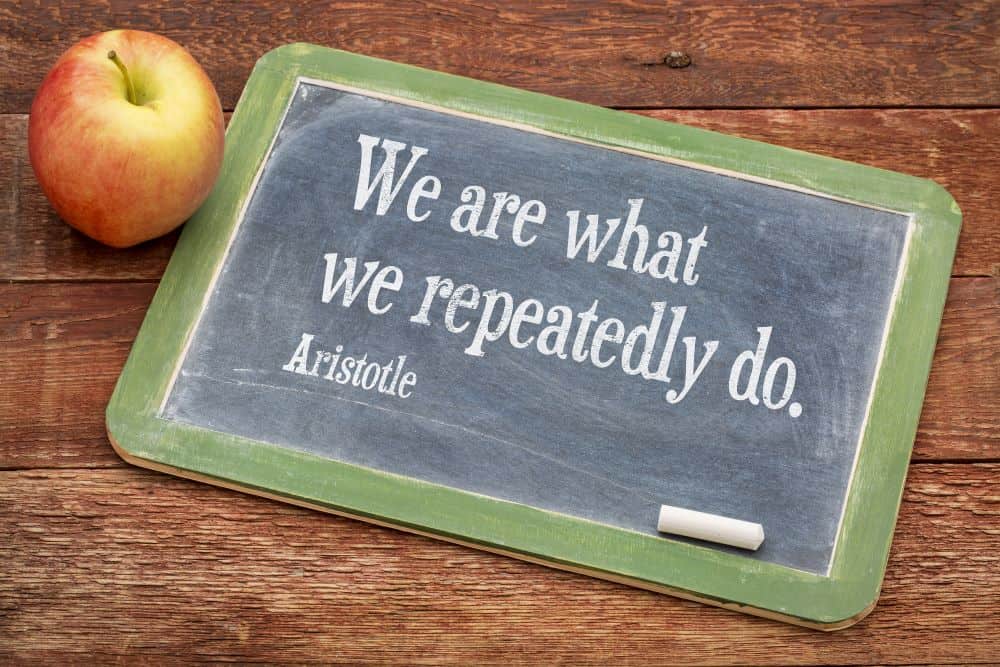
    Chalkboard relating to addiction and habitWhat is Addiction?

    Let’s define addiction as repeated involvement with anything, despite excessive costs, because of craving.  That sounds similar to habit, which is also repeated involvement with something. What are the differences and similarities between addiction and habit?

    Let’s start with some examples of what appears to be an addiction. A college freshman ends up in the emergency room after his first binge but is not repeatedly involved with alcohol (although he may soon be). A medical patient on opiates for pain control does not crave the next injection for the “high,” but simply wants pain relief. A low stakes poker player has minor losses, but the pleasure of gambling in this manner, for this individual, outweighs the cost. This last example illustrates how addiction is highly dependent of the context in which it occurs. What is a minor expense for one individual might not be for another.

    Addiction as a Disease

    Let’s also consider the definition of addiction as a disease. The “three C’s” of this definition are craving, consequences, and (loss of) control. Although widely used, the craving and control aspects of this definition are inaccurate.  The disease definition is all-or-none. You either are an addict/alcoholic or not. In fact, there are many aspects of addiction and you could be high, medium, or low on any of them. There is no clear dividing line where addiction begins.  Secondly, craving is understood as uncontrollable. However, with practice craving is fully controllable. Otherwise, addiction is a hopeless situation–but it’s not!

    Fortunately, everyone agrees about the negative consequences of addictive behavior. The reason to change addictive behavior is that it’s bad for you! Although you may enjoy getting high, the rest of your life is falling apart.

    If the behavior in question creates more good than harm, we have a positive addiction. Positive addiction is regular involvement with a substance or activity, accompanied by a minor degree of craving, with the benefits of involvement outweighing the costs. Habit is repeated involvement when costs and benefits are about equal. Ironically, the resolution of (harmful) addiction involves the development of positive addictions.

    Consider toothbrushing. If you brush regularly (and I hope you do!), but miss one a brushing, do you begin to crave the opportunity to brush? I do, and I believe many others do. The craving is not strong, but there is a sense of having missed something. As severe addictions develop, positive addictions drop out of the individual’s life (including tooth brushing!), and the restoration of these behaviors (and the development of new ones) is a crucial aspect of overcoming the addiction.

    Addiction and Habit In Daily Life

    Using our definition as a guide, we can say that there is a continuum of repetitive behaviors. At one end lies harmful addiction (costs exceeding benefits), at the other lies positive addiction (benefits exceeding costs). In the middle is a plain habit. All involve craving to some degree. We might also describe the continuum as consisting of bad habits, plain habits, and good habits.

    The same repeated behavior could be a positive addiction, a harmful one, or a habit. Exercise or wine-drinking are two common examples. Cocaine use is another example if we consider the coca-leaf chewing of millions of South Americans, which is akin to coffee drinking. Possibly any addictive involvement that lies at the severe end of the continuum, for some individuals, could also be found at the other end, in other individuals (although the behaviors associated with these involvements would be dramatically different).

    Some involvements may in practice tend toward only one end of the continuum (e.g., toothbrushing), but what happens normally can also happen in unusual circumstances or contexts. The cost-benefit analysis of any behavior is dependent on its frequency, intensity, context, and other factors. Before we labeled something a bad habit, plain habit, or good habit we would need to understand something about the individual’s entire life.

  • Addiction Impaired Professionals

    Addiction Impaired Professionals

    On June 30, 2008, the state of California stopped its medical diversion program.  This program was designed to protect the public from physicians with addiction problems, and simultaneously to assist physicians in achieving addiction recovery.  The diversion program was widely criticized as less than effective.  To address the concerns about the medical diversion program, the California legislature passed SB1441:

    “SB 1441 created the Substance Abuse Coordination Committee (SACC) subject to Bagley-Keene Open Meeting Act and requires the committee, by January 1, 2010, to formulate uniform and specific standards in specified areas that each healing arts board shall use in dealing with substance-abusing licensees, whether or not a board chooses to have a formal diversion program.”  quoted from http://www.dca.ca.gov/about_dca/sacc/index.shtml.

    Dr. Horvath has submitted written comments to the SACC. You may read them here.

    You might also be interested in reading:

    How society should view addiction

    Ending recoveryism

    Let’s stop insisting addiction is a disease

    Will insurance cover addiction treatment if addiction is not a disease?

    AA’s dominance in the US is harmful

    Court-ordered 12-step attendance is illegal

    CRAFT: An alternative to addiction “intervention”

    Substance abuse evaluations in child custody cases

  • Helping Your Troubled Teen Without Making Things Worse

    Helping Your Troubled Teen Without Making Things Worse

    different avenues of addiction treatment for teensRecent revelations of scams and manipulations on Wall Street have opened our eyes as to just how greedy and dishonest some individuals can be. It should be no surprise that there are individuals who prey on the desperation of parents whose teens have become involved in alcohol and other drugs, gangs, crime, and violence. Considering the many forms of trouble that seem to attract teens, and our seemingly limitless willingness to sacrifice for our kids, parents of troubled teens are appallingly at risk for exploitation. This sad truth is grippingly revealed in Maia Szalavitz’s appropriately titled Help at Any Cost: How the Troubled-Teen Industry Cons Parents and Hurts Kids (Riverhead Books, 2006).

    Even professionals in human services are often not aware of what can be done for teens that are safe and effective. Though well-intentioned, professionals may in ignorance become the conduit bringing parents to individuals who sell “tough-love” programs and boot camps with tales that escalate the legitimate concerns of parents into a blind panic. Szalavitz’s book describes how parents are threatened that if they do not do as instructed their children will end up dead. Parents may be persuaded to mortgage their homes to pay and to allow their teens to be kidnapped out of their beds and taken to tough boot camps.  These camps are run by inexperienced and under-qualified staff and be ineffective at best, harmful at worst.  Among the worst abuses is that teens are prevented from communicating privately and directly with their parents, who would remove their teens if they knew what was actually happening to them.


    Evidence-based addiction treatment for teens and families

    What’s the alternative?  There are several “Evidence-Based Practices” supported by rigorous evaluations of treatment effectiveness in both the short and long term.  The treatments include parents and other family members and focus on behavior change. Three such approaches, not found in the Szalavitz book, are described below.  Before you act on the urge to send your teen to boot camp, or alcohol and drug rehab, you might want to check out these options.

    The most intensive evidence-based practice, Multisystemic Therapy (MST), is a family-focused, home-based program that focuses on chronically violent, substance-abusing juvenile offenders who are at high risk for out-of-home placement, and who are 12 to 17 years of age.


    Multidimensional Family Therapy

    Multidimensional Family Therapy (MDFT) is an outpatient family-based substance use treatment for teenagers. It recognizes that adolescent drug use originates from a network of influences (individual, family, peer, community).  MDFT works to reduce unwanted behavior and increase desirable behavior in many different ways and settings, using individual and family sessions held in the clinic, in the home, or with family members at the family court, school, or other community locations.


    Brief Strategic Family Therapy

    Brief Strategic Family Therapy (BSFT) targets family interactions that are thought to maintain or exacerbate adolescent drug abuse and other co-occurring problem behaviors. Such problem behaviors include conduct problems at home and school, oppositional behavior, delinquency, associating with antisocial peers, aggressive and violent behavior, and risky sexual behavior.

    One important advantage of family-based approaches, over addiction treatment and support groups for teens, is that teens with lesser problems do not pick up more serious problems by associating with other teens who have them.

    Szalavitz notes that the best way to prevent substance use problems is to see that your teens have goals.  You can do this by showing interest and curiosity about their daily lives when they are younger, and about their life plans as they become teens. We should also keep them safe, connected to you, on track for college or other positive future plans, and working towards their goals.