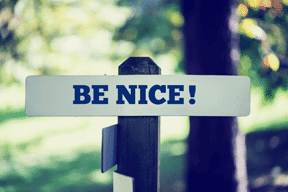
 Being kind to others feels good, and research shows that it also has beneficial effects. Did you know that kindness actually increases happiness? When we do something nice for others, the dopamine levels in our brains increase, making us feel happier. This feeling is known as a “helper’s high.” Kindness also improves our relationships by making us feel more bonded to other people. Kindness has even been found to slow the aging process.
In honor of “Be Kind to Humankind Week,” consider making an effort to spread some extra cheer. Here are a few simple things to try:
1. Random acts of kindness—Simply do something nice for somebody else! You could pay for a stranger’s Starbucks order, put a quarter in a meter that will soon expire, or offer to do some yard work for a neighbor.
2. Express gratitude—Acknowledge the qualities that you appreciate in your friends and family members. Recognize the love and support that you get from others, and show that you are grateful for it. A simple “thank you” goes a long way.
3. Pay it forward—When somebody does something nice for you, commit to spreading the joy by being kind to somebody else as soon as you can.
4. Be kind to yourself—This can be a challenge. We are often our own worst enemies, pointing out our failings and shortcomings while dismissing or minimizing our achievements. To start being kinder to yourself, spend some time at the end of the day recognizing what you did well and making a list of qualities that you appreciate about yourself.