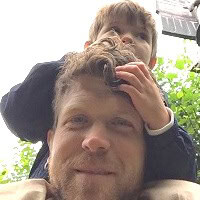

The next recovery blogger in our interview series is truly inspiring. Mark Goodson has been sober for over 10 years and in that time he met, and married his beautiful wife, and had two children. Mark changed his life for the better and works every day to understand the nature of his mental illness and use that knowledge to live his happiest life.
Mark’s calling is writing, he wrote his first novel in just four months and we could not be more thrilled to have a piece of his story on his journey to recovery here to share.
Interview printed with permission
PR: What is the best part about being sober?
Mark: My capacity for life has grown immensely. I don’t bury feelings or grind axes. I face the world fully frontal and vulnerable. And while that is challenging, it provides me with an independence I never knew existed.
I chased feelings of release when I was drinking and drugging. I longed to escape and live out some lavish fantasy of wild freedom. Sobriety taught me that freedom requires discipline and responsibility. The more I meet my obligations, speak the truth, show up on time, and do the next right thing, the more contentment and jubilation I experience. Thanks to sobriety, I see beauty everywhere, and I see setbacks as opportunities for growth rather than consequences to flee from.
PR: How has being in recovery changed your life for the better?
Mark: Recovery has transformed a hyper-functional side of my personality into an asset.
Drug habits are hard to manage. I am one of those high-functional alcoholics and addicts. While I hit bottom in a psychiatric ward, I never missed a day’s work. Fooling people into thinking everything was all right became a full time job. Keeping track of lies and covering up my tracks required a bee-hive of mental activity. Back then I used those skills to better destroy myself.
Today, I use those powers for good instead of evil. I am faced with mountains of responsibility each day in my career and with my family. I show up when I am expected to and be of service however I can. It seems addiction cultivated a hyper-active mind and spirit that I now use to try and make the people around me better. It’s difficult to explain, but if you’ve survived with a serious habit for a while, you have an incredible resilience and determination built into your DNA. It just needs some redirecting.
PR: What advice would you like to share with others just starting their journey?
Mark: If you are newly clean and sober, you will be feeling urges today to pick up. The thought could come in a thousand different ways. Your mind will create innumerable reasons why it is a good idea to go back out to that misery you know too well. So please, when that thought creeps into your mind, say this, “Not today.” It is a powerful mantra. While it seems counter-intuitive, refraining today is all we have.
The minute you start thinking deep into our futures—I can’t see a concert sober; I can’t raise a glass of ginger ale at a wedding; what will stop this horrible ache tomorrow?—we are doomed. We stay sober today and tomorrow will take care of itself. You can take it from me, a guy whose waking thought, if he slept the night before, was his next fix. I’ve said “not today” over 3,650 times, and it hasn’t failed me yet.
PR: What has been the most challenging part about remaining sober?
Mark: It was hard to get sober. What’s been even harder is understanding that my mind is wired for relapse, even with a decade clean. The longer time I have, the more vigilant I must become. Urges morph into seemingly innocent thoughts and actions: a slip of the tongue or an innocuous secret. These are the things that I look out for. They end in a drink or a drug. But if I handle them early, I can continue to live this sober life, this life beyond my wildest dreams.
PR: What are some things you do to overcome recovery challenges?
Mark: I acknowledge the sick patterns of my mind. These patterns can be stopped. If we know the thoughts or actions that lead to worse thoughts or actions, we can fix the leak before the house floods, so to speak. But we can’t learn these skills alone. We have to seek and receive help from others who share this sober journey. I cannot recommend enough that you seek one of the many programs out there to help you treat your suffering. They may not all be for you. But if you’ve been willing to read my answers to these questions, there is a road to recovery for you.
We want to give Mark one last big thank you and hope that you are just as inspired by his journey as we are. Keep your eye out for his book on growing up in the age of painkillers.